
The market
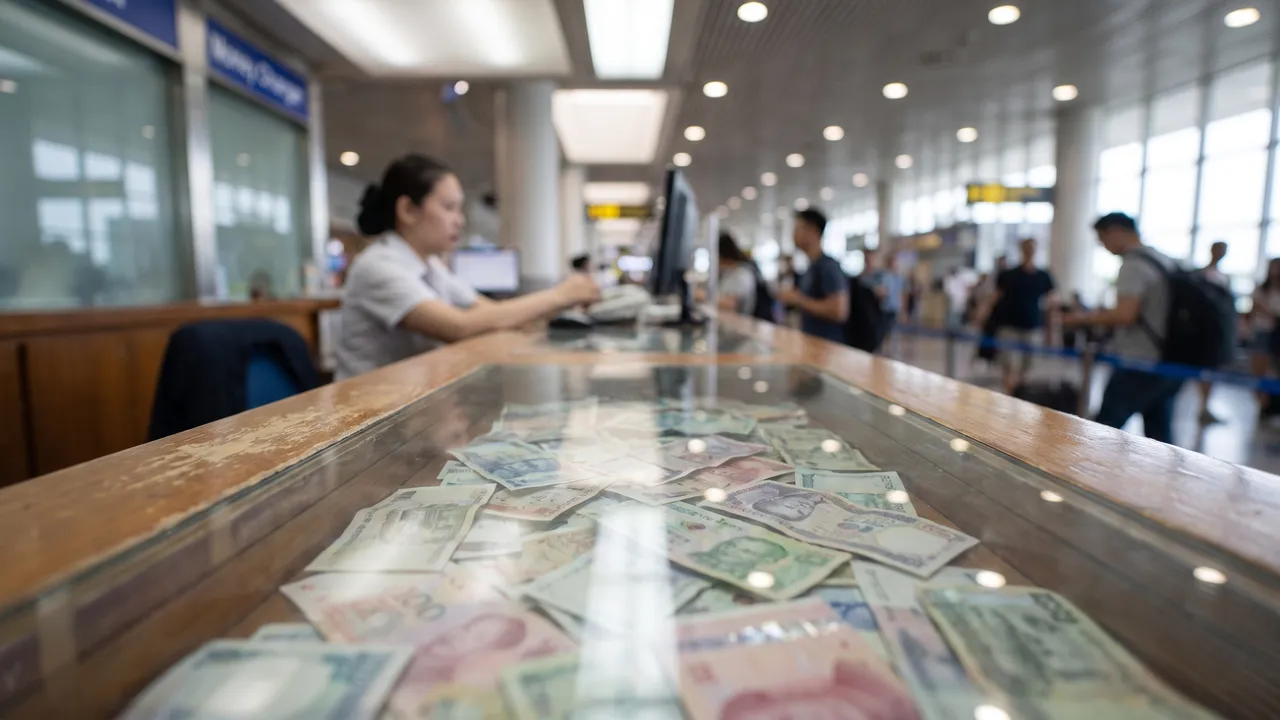
Every time a company pays a supplier in another country, a fund buys foreign shares, a central bank manages its reserves or a tourist changes money at the airport, one currency is exchanged for another. Added together, those exchanges make the foreign exchange market, which the Bank for International Settlements measures at roughly nine and a half trillion US dollars a day. It has no building and no opening bell. It is a network of banks, dealers and electronic venues that quote prices to each other around the clock from Monday morning in Sydney to Friday evening in New York.
A currency is always priced in terms of another currency, which is why the market trades in pairs. EUR/USD at 1.16 means one euro costs 1.16 US dollars. If the euro strengthens the number rises, if it weakens the number falls, and a trader who bought euros at 1.16 and sold them at 1.17 has made a cent on every euro.
Who trades it
Most of the volume comes from banks dealing with each other and with large customers, from funds and companies hedging or speculating, and from the high-frequency firms that supply prices electronically. Retail traders, individuals trading their own money through a broker, are a small share of the total, a few percent of spot volume by most estimates, but a large number of people: public figures from brokers and regulators suggest more than ten million active accounts worldwide.
The retail trader does not deal with the banks directly. A retail broker stands in between, quoting prices drawn from the interbank market and letting the client trade in sizes far smaller than the market's minimum, with the broker aggregating and hedging the flow or taking the other side itself.
What a retail trade is
When a retail trader buys EUR/USD, no euros arrive in a bank account. The trader opens a position with the broker, a contract whose value rises and falls with the exchange rate, and closes it later by selling. The difference between the opening and closing price, multiplied by the size of the position, is the profit or loss, paid in the currency the trading account is held in. In most of the world that contract is a contract for difference, a CFD; in the United States and Japan it is called rolling spot forex; the mechanics are the same.
The position is leveraged. The trader deposits a fraction of its value as margin and the broker extends the rest, so a 1,000 dollar deposit can control a position of 30,000 dollars in Europe or 500,000 dollars at an offshore broker. That is what makes small price moves worth trading and what makes the losses as fast as the gains. Every night a position is held, the broker applies a swap, a small interest charge or credit reflecting the difference between the two currencies' interest rates.
The costs
Three costs attach to a trade. The spread is the gap between the price the broker buys at and the price it sells at, paid the moment the trade opens. The commission, on some account types, is a fixed charge per lot. The swap is charged for every night the position is open. The spreads and commissions article and the swap calculator go through each in turn, and the cost of a trade paper in the research section adds them up.
What to know before starting
Regulators in Europe, the United Kingdom and Australia require brokers to publish the share of their retail clients who lose money, and the published figures sit between roughly 65 and 82 percent. That is not a reason to stay away, but it is a reason to start small, to learn on a demo account, to understand leverage and margin before using them, and to choose a broker on the strength of its regulation rather than its bonus. The articles in this section take each of those in turn, and the site's broker research is there to help with the last.
Educational content is general information and does not consider your objectives, financial situation or needs. Forex and CFD trading involves significant risk.